
Rail-to-Rail Shows What ATP Can Do
The World Cup arrives in Los Angeles this week as both a spectacle and stress test. For a few weeks, the region will be asked to do what it has often promised but rarely delivered at scale: move people efficiently without surrendering the city to traffic. AB 2168 matters because it recognizes a simple truth hiding in plain sight — and not just for these rare mega events, but for everyday life in Southern California. Big transit investments need active transportation connections to work and make mode shift not just desirable but irresistible. Sidewalks, crossings, bike routes, and safe station access are not decorative. They are the connective tissue of a functioning transportation system.
One example of what the Active Transportation Program can make possible is already open on Slauson Avenue. The Rail-to-Rail Active Transportation Corridor is a 5.5-mile walking, biking, and rolling path through South Los Angeles and Inglewood. It connects communities near the Metro K Line Fairview Heights Station, the J Line Slauson Station, and the A Line Slauson Station. It also links to 17 Metro bus lines, three DASH lines, and five Metro Bike Share stations.
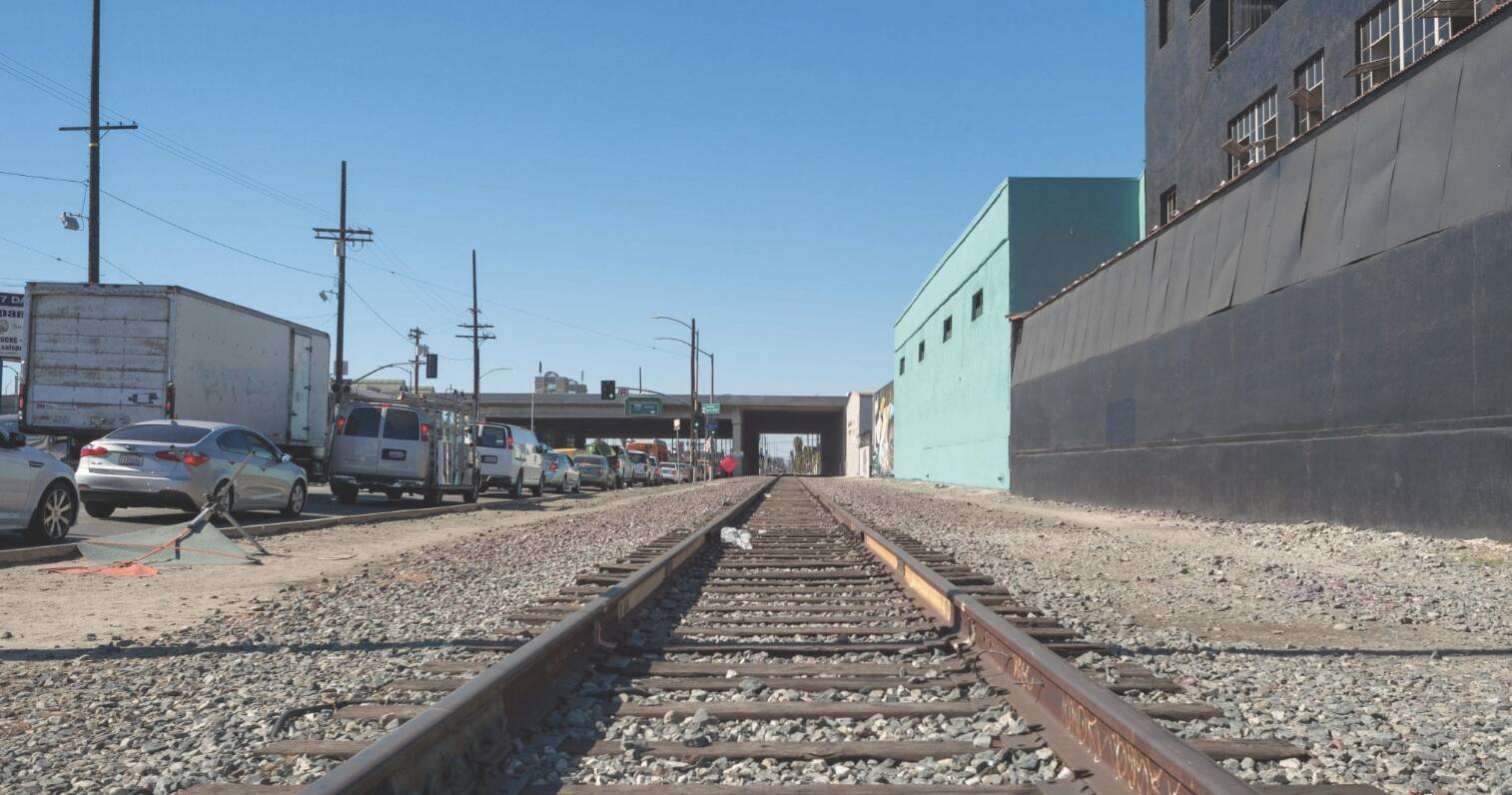
Old rail corridor before the Metro Rail to Rail project.
This is what the Active Transportation Program is for. A former rail right-of-way that sat neglected for decades is now a public space with trees, lighting, seating, safer crossings, bike share, stormwater infrastructure, and room to move without a car. Metro says the $166 million project includes 472 new trees, bioswales, bioretention planters, and safety improvements along and across the Slauson corridor.
On an ordinary morning, the project makes the case more plainly than any policy memo could, with students and families alike making use of the facilities and the myriad connections. A corridor once treated as leftover space has become useful, safe, green, and alive. That is the glory of ATP. At its best, it turns abstract state goals into concrete neighborhood change that improves safety and quality of life.
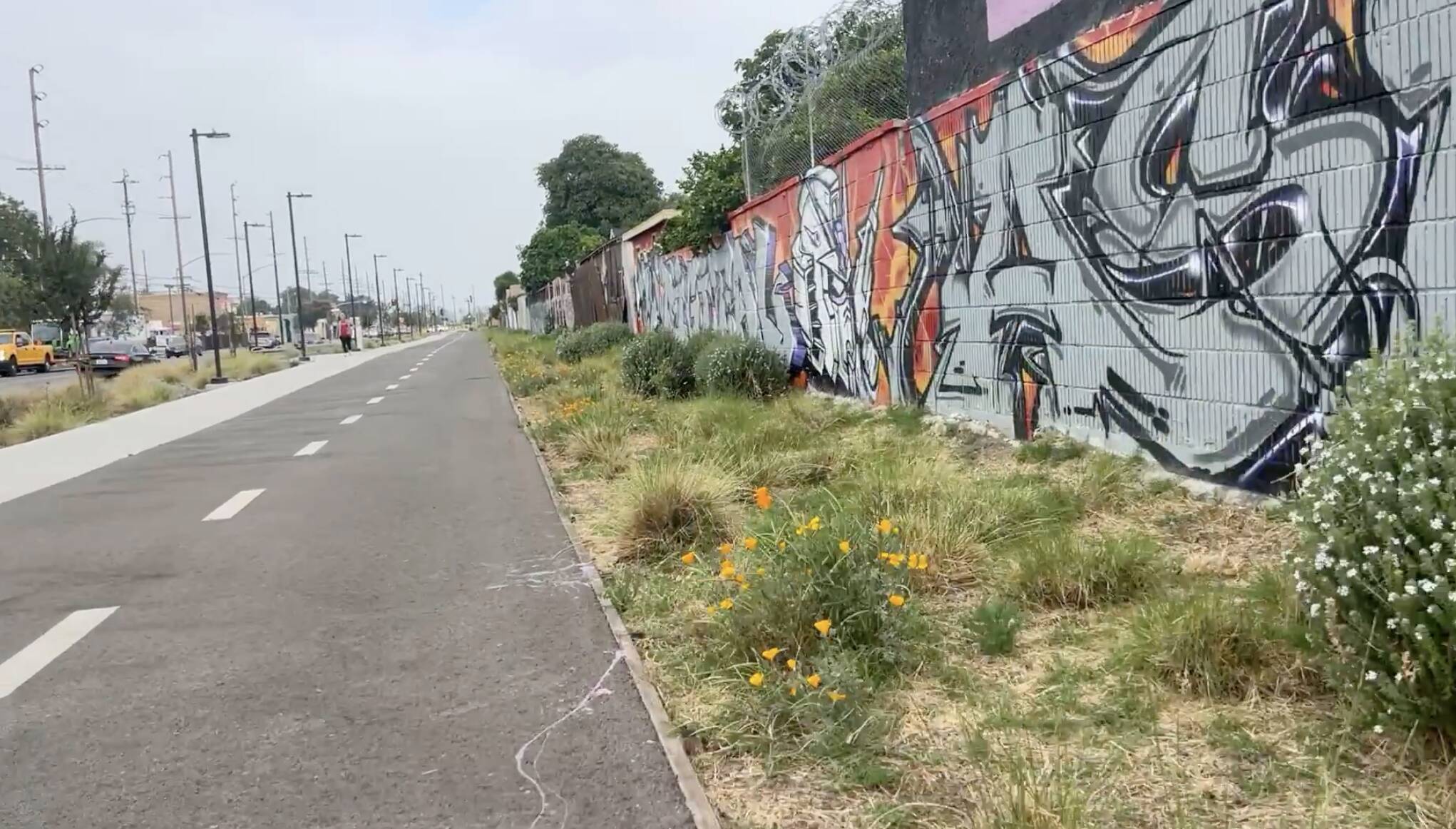
Rail to Rail Path on Slauson Ave in South Los Angeles
Rail-to-Rail also shows why the program needs AB 2168
The project was a success, but it was not simple. Streetsblog reported that the project was more than a dozen years in the making, aided by a $15 million federal TIGER grant and an $8.326 million ATP grant in 2015. It took layered funding and years of persistence and local coordination, but ultimately a project this obviously useful should not require an act of civic endurance. When ATP funding is this limited, every dollar has to compound. A safe crossing should complete a route to transit. A bikeway should extend a real network. A sidewalk project should unlock access to a bus stop, school, clinic, or grocery store. The state should prioritize projects that make the surrounding transportation system more useful.
AB 2168 would make a good program sharper. The bill would modernize the ATP’s goals to appropriately emphasize better access to public transit; update “safe routes to transit” to include station areas, planned transit, transit corridors, including in underserved or rural areas; and ask the project proponents to consider how ATP dollars can be paired with other transportation funds for larger, network-level improvements. It would also encourage the California Transportation Commission to enforce penalties when applicants fail to use previously awarded ATP funds in a timely way, while accounting for factors outside an applicant’s control.
That is the right lesson from Rail-to-Rail: connect the pieces, prioritize the corridors with the greatest public benefit, and get the money out the door. AB 2168, sponsored by CalBike, is how we will compound the investment of the ATP.
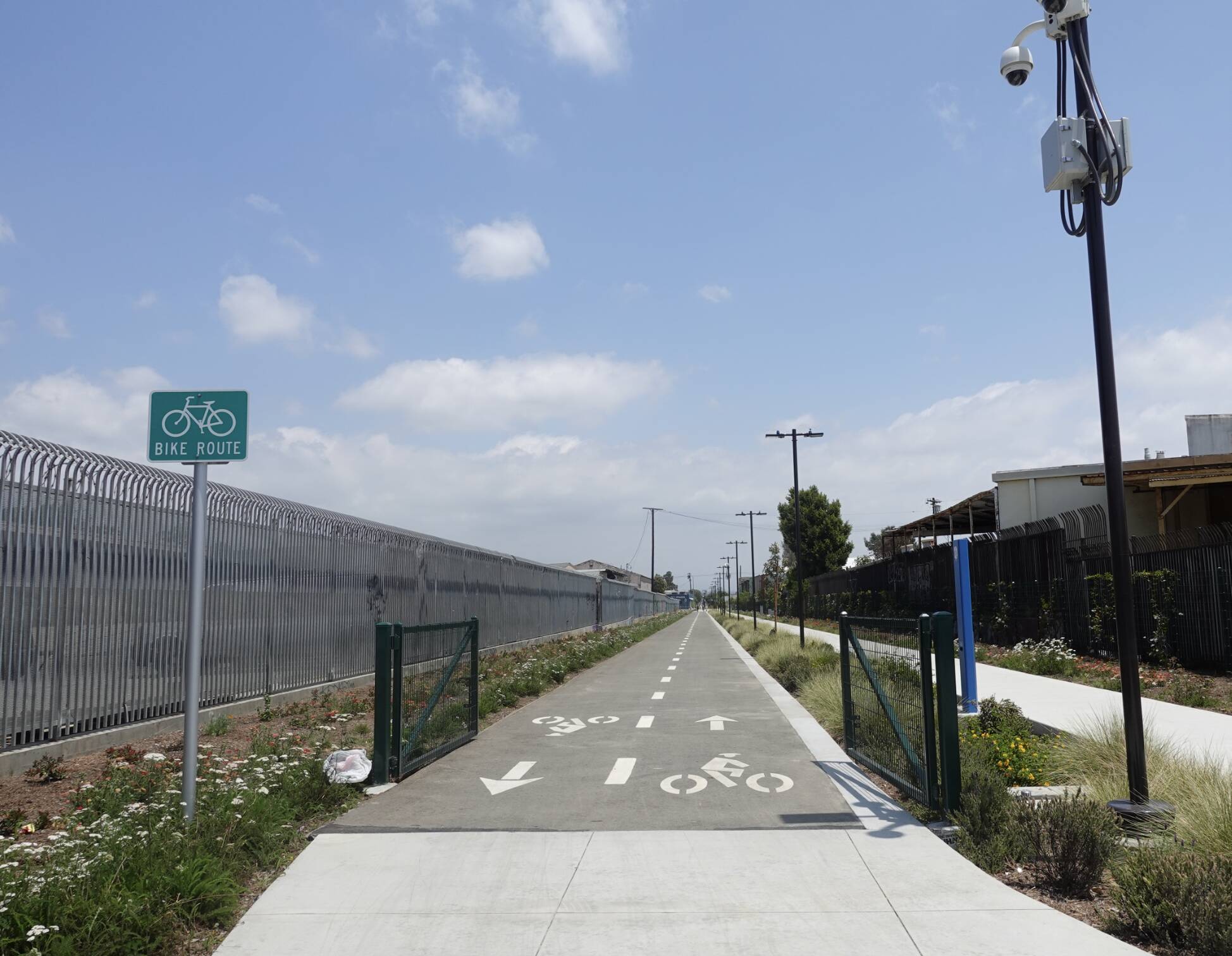
Spur off of Rail to Rail path