California Independent Electric Mobility Council
This report outlines the program and highlights important takeaways from the California Independent Electric Mobility Council for statewide regulatory policy, education, and programming.


E-bikes can make longer trips, hills, cargo hauling, and riding with children possible for people who might not otherwise use a bicycle. They also provide an affordable transportation option for Californians who cannot drive or do not have access to a car.
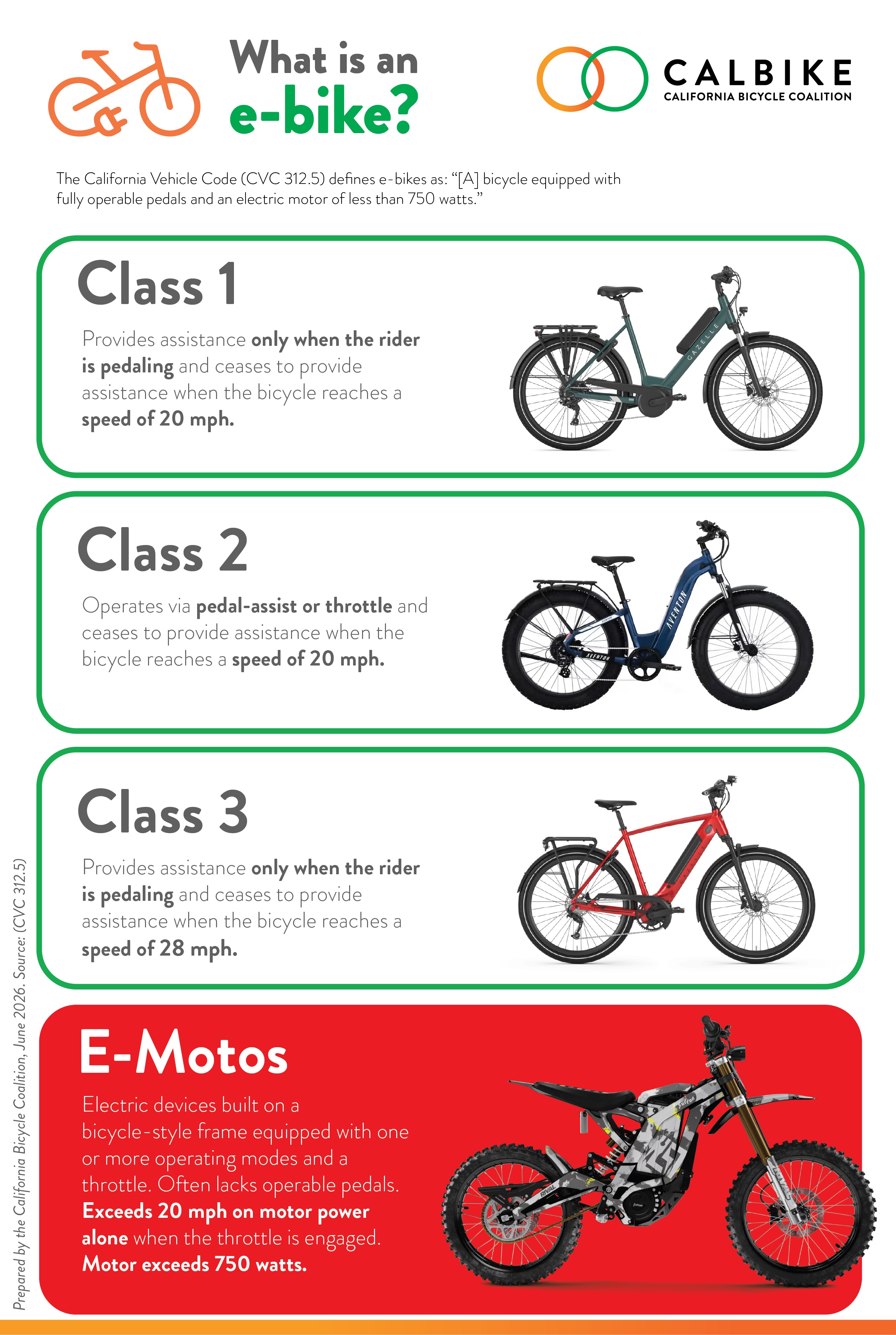
The report finds that California’s three-class e-bike system is functional, though poorly understood outside professional policy circles. The larger problem is the growing number of faster and more powerful electric devices that fall outside those classes while being sold or marketed as e-bikes. That confusion affects consumers, parents, journalists, public officials, and law enforcement. It can also lead policymakers to restrict legal e-bikes in response to conduct involving devices that are already outside the legal e-bike framework.

What the group agreed on more firmly is that out-of-class devices, including e-motos, high-speed e-scooters, e-unicycles, and similar products that don’t fit the existing framework, are where the real problems lie. These devices are already on roads and paths in significant numbers, which complicates any purely prohibitionist response. One camp argued that out-of-class devices are illegal products and should be treated as such: be banned, not legitimized. The other view was essentially that the cat is out of the bag: given how many of these devices are already in circulation, a pragmatic path toward regulated use is more realistic and potentially more beneficial than trying to suppress them. Neither side fully persuaded the other, and this remained unresolved across all three meetings.

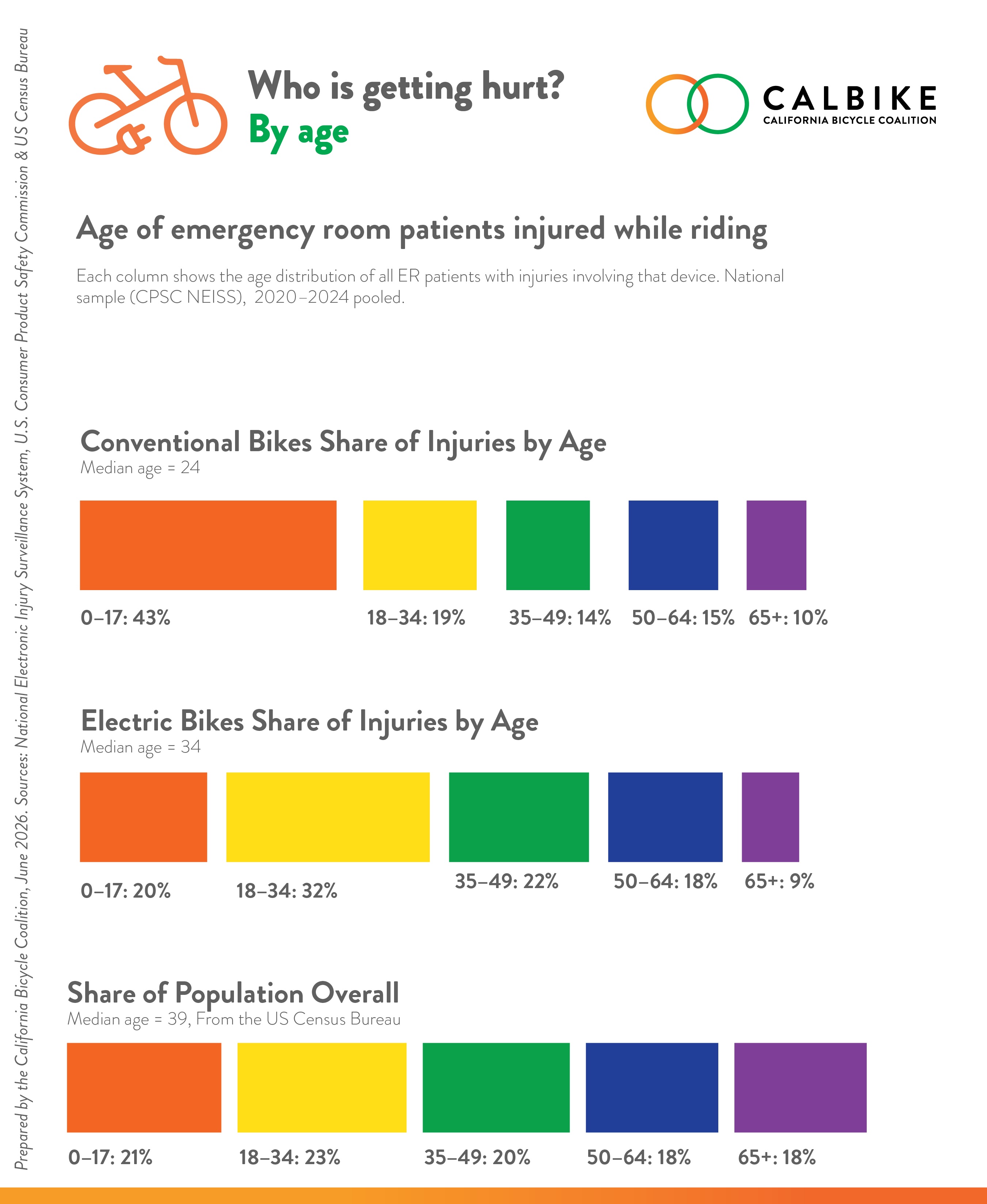
Age restrictions generated real disagreement. There was rough consensus that children under 12 probably shouldn’t be operating e-bikes on public roads, but very little agreement beyond that. Proposals to restrict riders under 16 found minimal support. The more promising direction seemed to be tiered frameworks, analogous to ATV regulations, that match device performance characteristics to rider age rather than applying a single cutoff across all classes. The Huntington Beach school district permitting model came up repeatedly as a practical example worth building on.

Terminology turned out to matter more than it might seem. The term “e-moto” ran into resistance when examined more closely. The motorcycle industry is uncomfortable with it because it risks associating out-of-class off-road products with legitimate on-highway electric motorcycles, which are simply motorcycles and have been for decades. Others felt the term was useful precisely because the press and public need something to grab onto. Whether the AP Stylebook or other style guides could help establish a standard term was floated without resolution. The underlying problem, that imprecise language in public discourse tends to become imprecise language in legislation, remained unresolved.
Following the conclusion of the California Independent Electric Mobility Council meetings, the CalBike staff regrouped, reviewed the take-aways from each council discussion, and developed a set of recommendations for future efforts. These are efforts that could be undertaken by CalBike itself or others, separately or collaboratively.
E-Motos: It is clear from the deliberations of the council, as well as the broader policy discourse, that future state policy should address the prevalent “e-moto” issue across California communities. Instead of further refining the legal e-bike categories, policy should be pursued that clarifies and addresses what exists beyond the bounds of legal e-bikes and e-motorcycles, folding these devices into the regulatory framework that governs other motorized means of transportation. Senate Bill 1167, authored by Senator Catherine Blakespear and co-sponsored by CalBike, People for Bikes, Streets for All, and Streets are for Everyone is one such effort currently in the legislative process.
Education: Multiple educational efforts could improve the public understanding and comfort with e-bikes. These include efforts targeted to the general public, drivers, and bicyclists alike.
Public Awareness: education for the broader public, in the form of public awareness campaigns, would be helpful to increase understanding of e-bikes, how to ride them, and how to walk or drive near them.
Policymaker Education: Taking educational efforts to city halls, county administrative offices, and the state capitol has the benefit of informing policymakers and their staff, who will shape future policy.