
SB 1167: Comparable States and the Road Ahead
SB 1167, CalBike’s cosponsored bill drawing a clear line between legal e-bikes and high-powered electric devices marketed as e-bikes, joins a growing effort to protect consumers across many states in recent years. The next phase will test enforcement, public understanding, and our commitment to bicycle access for these newly emerging devices we want to safely integrate into active transportation networks. Other states offer useful lessons for what comes next. Their policies show three patterns: substantial overlap in consumer protections, convergence toward a more complete approach to safety, and barriers that legislation alone will leave unresolved.
When SB 1167 was proceeding through the legislature, CalBike was guided by a simple truth for what consumers in California can expect: “Parents should be able to shop for an e-bike without having to investigate whether the product lives up to its description,” said CalBike Executive Director Kendra Ramsey. Misleading marketing shifts responsibility onto people who often have little reason to know the details of vehicle law. A buyer may assume that a device advertised as an e-bike can use a bike lane or a shared path. That assumption can leave a family with a device that has different operating requirements and cannot legally be used as intended.
Across the country, we see varying legislation on e-bikes aimed at who can ride and where. As SB 1167 gets put into practice, it joins other similar legislation across the nation affecting the e-bike marketplace. Among these efforts there is significant overlap, and we are likely to see diverging approaches to enforcement in the coming years.
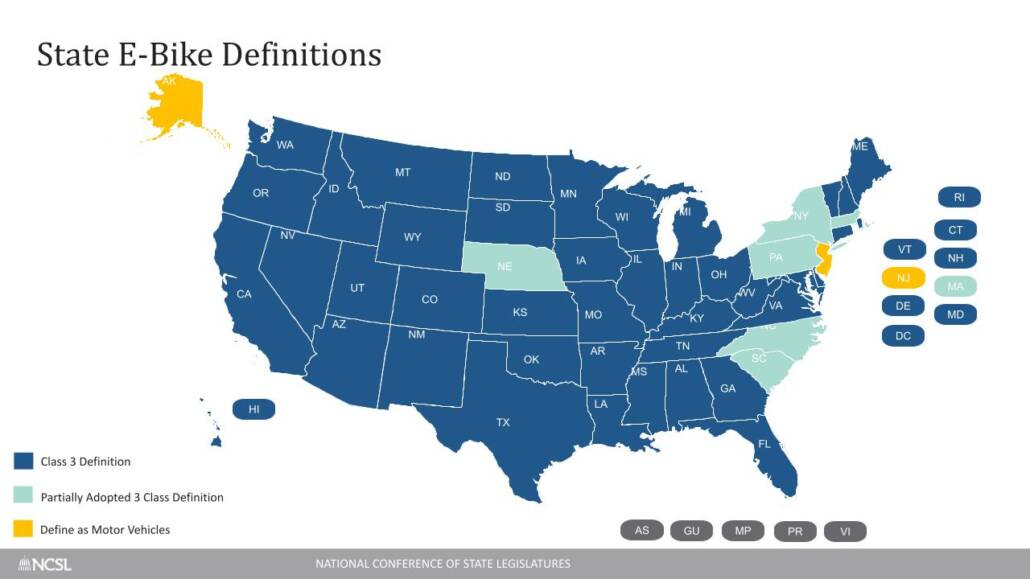
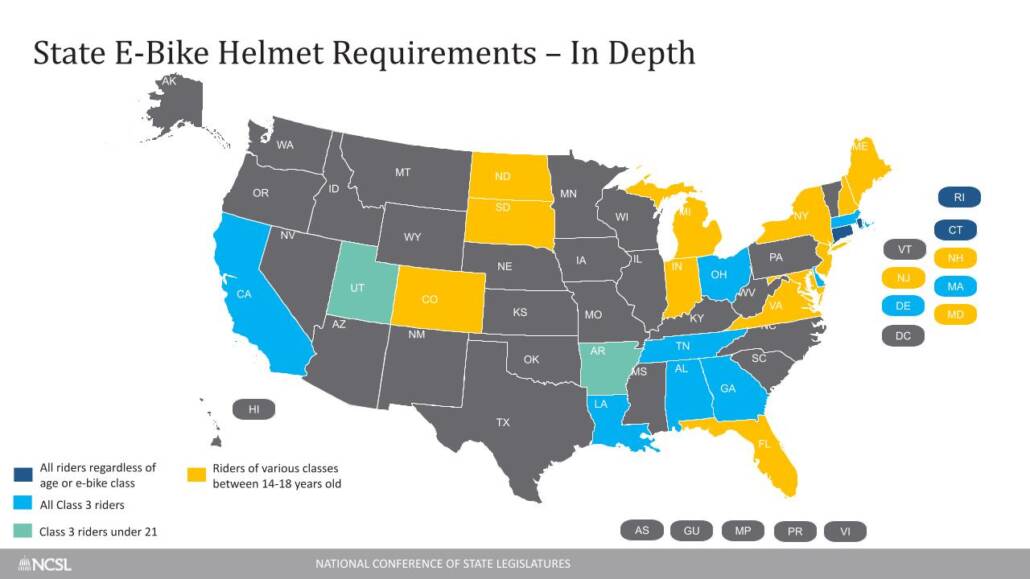
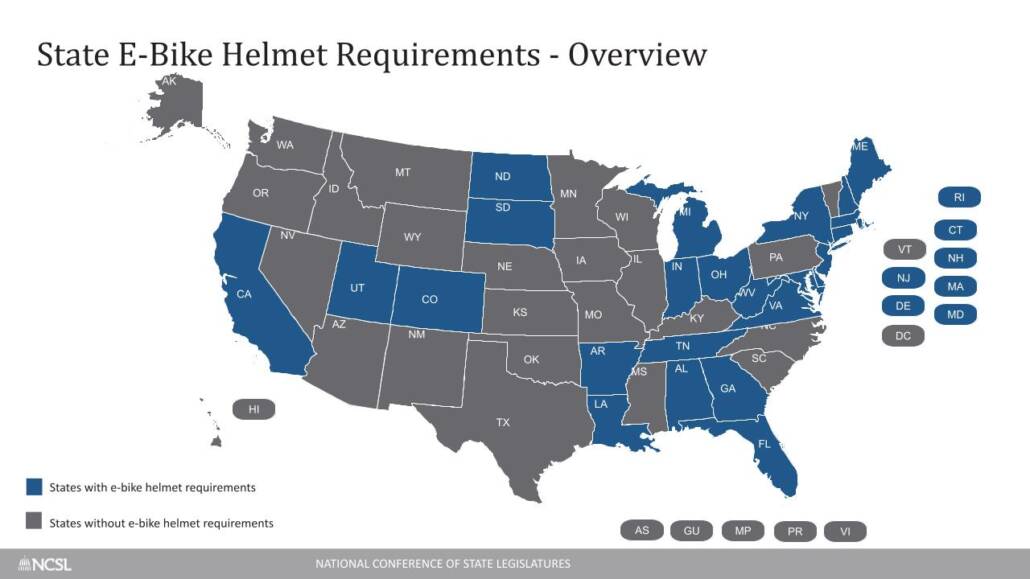
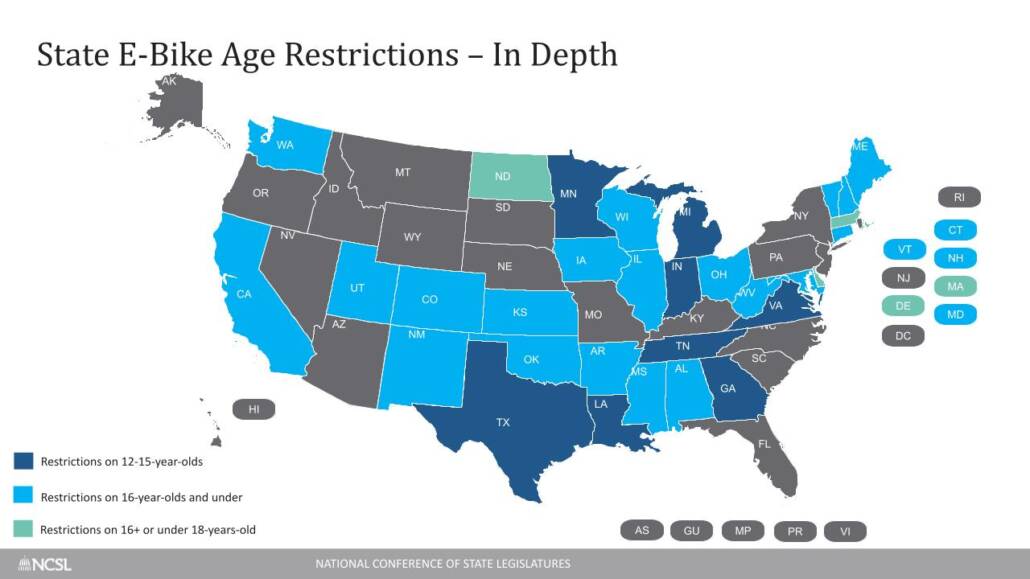
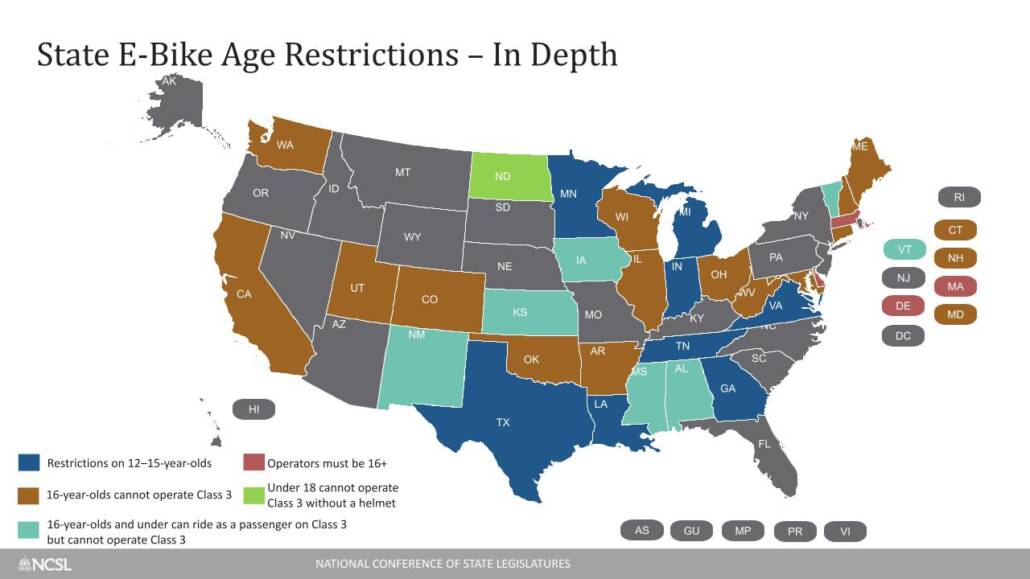
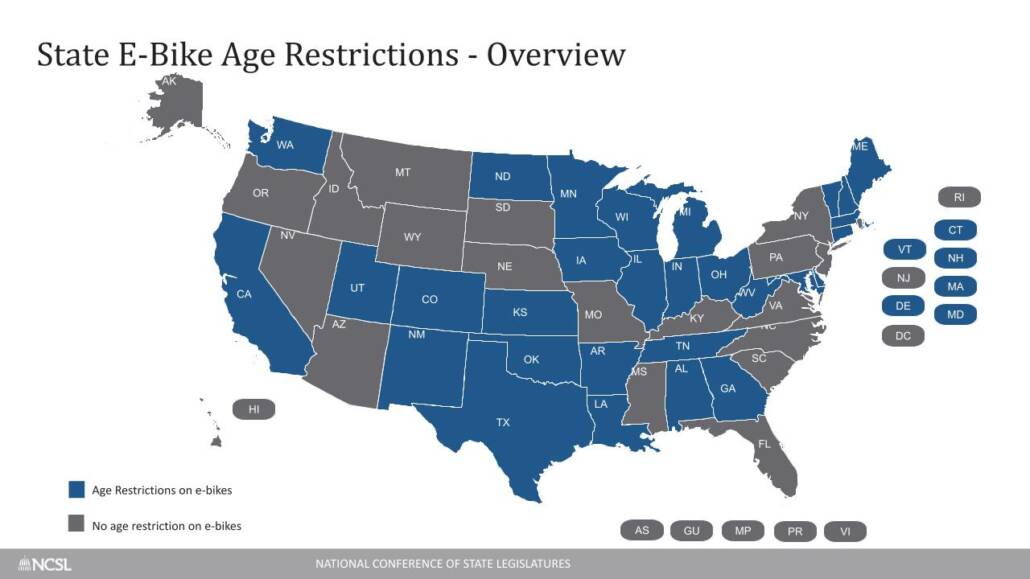
Images from State E-Bike Traffic Safety Landscape 2026 NCSL Presentation
Similarities in putting onus on retailers
Similar to California’s SB 1167, Colorado’s HB25-1197, signed in 2025, treats misleading e-bike marketing as a deceptive trade practice. It also recognizes a practical distinction: a bicycle can offer several modes that each stay within legal e-bike classes, while a device designed to exceed those classes presents a different legal question.
Like-minded Minnesota’s 2024 consumer protection law requires written information about an e-bike’s motor power, speed, and class before purchase. It also addresses misleading class labels and advertising for devices outside the legal e-bike definition. Utah’s 2024 law similarly addresses advertising, disclosures, and devices with multiple operating modes. Connecticut’s 2025 legislation requires disclosures before sale and in advertising when a seller uses e-bike terminology for a device outside the definition.
Among these states we see a consensus in outlook: the businesses designing, importing, advertising, and selling these products should be accountable for accurately explaining them.
Where approaches may be similar but begin to diverge
Among the states we reviewed, several have adopted detailed protections covering multiple parts of e-bike ownership, including batteries and safety incident data reporting.
Delaware: a documented sales process backed by consumer protection law. Its 2026 law requires clear advertising disclosures for covered higher-powered devices, a written disclosure before purchase, the buyer’s signature, and retention of that record for at least three years. Violations are considered unlawful business practices. The law also prohibits misleading claims about access to bicycle facilities and adds vehicle categories to public crash reporting. The retained records give officials something concrete to examine when investigating a sale.
New York: safety requirements spanning purchase, use, and emergency response. A package enacted in 2024 combines battery manufacturing standards, operating manuals, charging warnings, and traffic-law notices with crash reporting requirements. It also directs state agencies to maintain safety resources and provide training materials for first responders. The traffic notice must be printed in English and the state’s two most common non-English languages.
Hawaiʻi: buyer education built into the purchase. Act 259, enacted in July 2026, requires permanent labels identifying an e-bike’s class, top assisted speed, and motor wattage, along with a booklet or pamphlet explaining state riding laws.
The convergence is in how these protections fit together: a buyer gets accurate information, a product meets the applicable safety requirements, public agencies have defined responsibilities, and crash records identify the devices involved. This will provide researchers with a legible base from which to discern what safety measures are the most appropriate.
Where barriers remain: enforcement, confusion, and access
Colorado offers California’s most immediate implementation lesson in the form of an unresolved concern. In August 2026, more than a year after its law was signed, 49 organizations and community leaders asked the attorney general to enforce it. Their letter reported continued misleading marketing, particularly online, and called for investigations, a consumer alert, and coordinated enforcement.
It offers a clear warning for California: passage needs to be followed by attention to what buyers actually encounter in the marketplace.
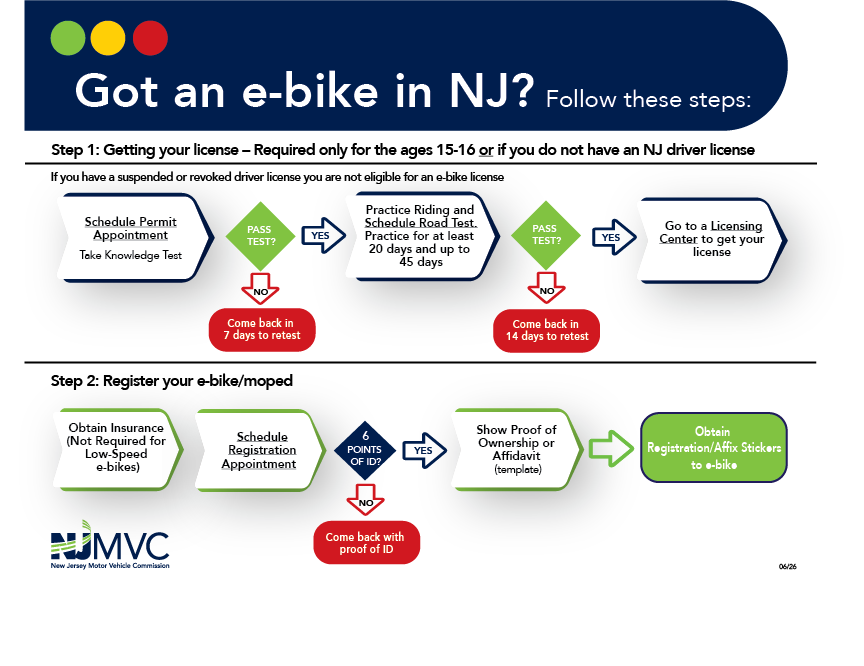
California seems to have avoided the most burdensome barrier — a policy response that makes legal e-bikes harder to use. New Jersey’s current requirements extend licensing and registration to low-speed pedal-assist bicycles. Its Motor Vehicle Commission explicitly exempts that category from insurance requirements. Even with that exemption, licensing and registration create administrative hurdles for people choosing a bicycle for everyday transportation.
What the future holds
The varying state approaches also strengthen the case for federal clarification. Under current federal consumer-product safety law, the definition of a low-speed electric bicycle includes a motor of less than 750 watts, without specifying whether that refers to peak or continuous power. Those measurements describe different capabilities and do not encompass all two-wheeled devices we see on the roads today.
Earlier this year, Amazon’s marketplace carried listings advertising devices capable of traveling more than 40 mph as “e-bikes,” well beyond California’s legal e-bike speed limits. In May, Amazon said it had removed identified listings and was reviewing similar products for compliance. SB 1167 establishes a clear mandate across the marketplace, making this voluntary action by Amazon the required simple standard. Beginning January 1, 2027, manufacturers and sellers must accurately identify their products and provide required disclosures. Devices outside the legal e-bike definition cannot be marketed as e-bikes.
That is the victory: these protections will be mandatory. California must now follow through by checking listings and retail practices and enforcing the law when sellers violate it.